
How to Help an Athlete Stop Overthinking During Games
How to Help an Athlete Stop Overthinking During Games
Your athlete knows what to do.
They’ve practiced it hundreds of times. They’ve shown you what they’re capable of in training. But when the game starts, suddenly they begin thinking instead of playing.
They hesitate.
They second-guess decisions.
They worry about making mistakes.
And instead of reacting naturally, they seem stuck inside their own head.
Parents often describe this as overthinking, and it’s one of the most common challenges we see with competitive athletes.
The good news is that athletes can learn how to manage it.
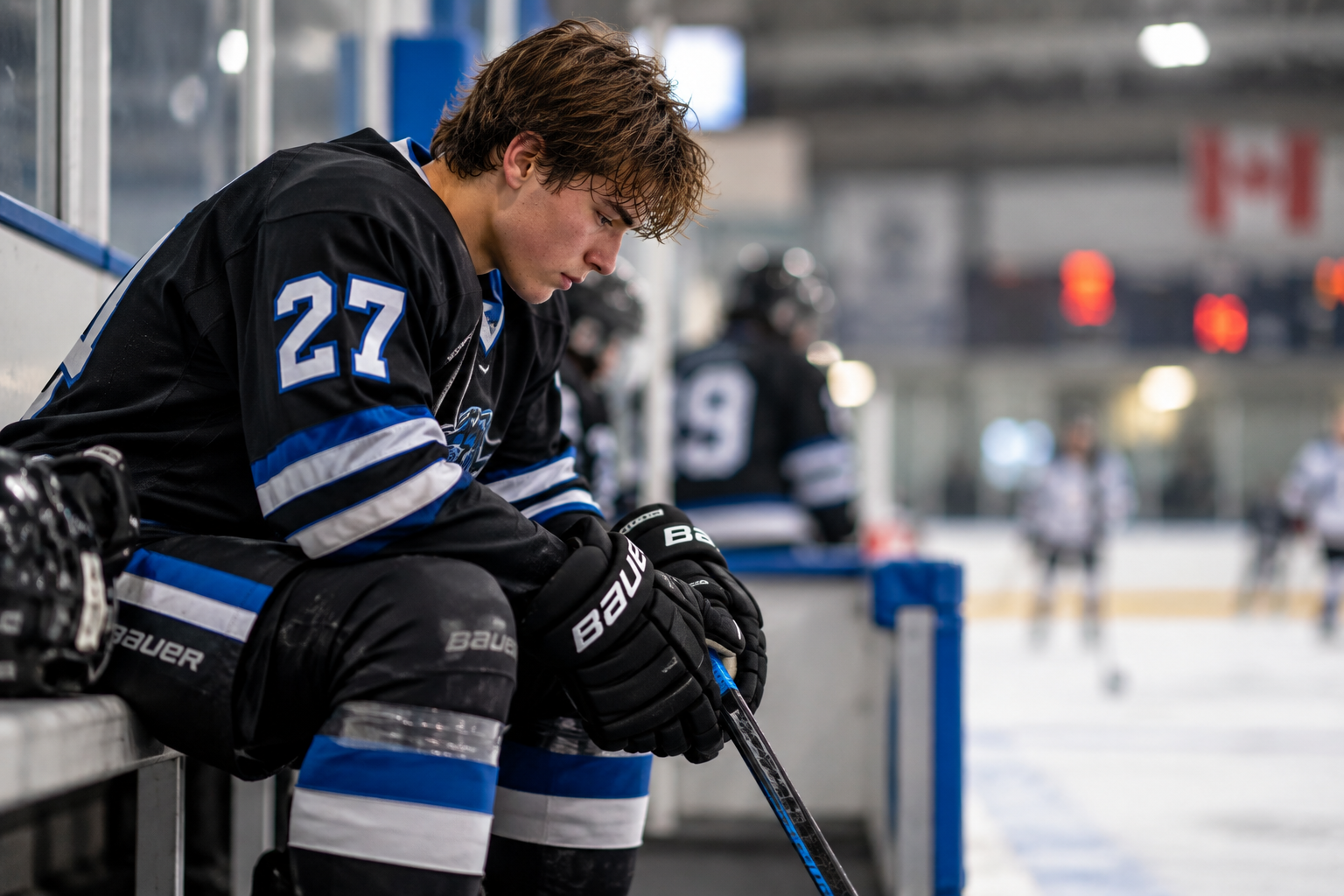
Why Do Athletes Overthink During Games?
Overthinking usually isn’t because an athlete doesn’t know what to do.
In many cases, it happens because they care so much about the outcome that their attention shifts away from simply competing.
Instead of focusing on the play in front of them, their mind starts racing:
What if I mess up?
What is my coach thinking?
Am I going to get taken out?
What if I disappoint my parents?
What if we lose because of me?
Now the athlete is trying to perform while simultaneously evaluating everything they’re doing.
That can create hesitation—and hesitation can dramatically change how an athlete competes.
Thinking About the Game vs. Playing the Game
Athletes need to think during competition.
They need to read situations, make decisions and adjust.
But there is a difference between productive thinking and overthinking.
Productive thinking helps an athlete recognize what is happening and respond.
Overthinking causes the athlete to question, analyze and judge themselves while the game is happening.
Think about learning to drive.
At first, you consciously think about almost everything: mirrors, brakes, steering, speed and traffic.
Eventually, many of those actions become automatic.
Sports work similarly.
Athletes spend thousands of hours developing skills so they can eventually trust those skills in competition.
When pressure causes them to consciously control everything again, performance can become slower and less natural.
Fear of Mistakes Makes Overthinking Worse
One of the biggest triggers is fear of making a mistake.
An athlete may begin the game thinking:
Don't mess up.
The problem is that their attention is now focused on exactly what they're trying to avoid.
Then a mistake happens.
Instead of resetting, they replay it:
Why did I do that?
I should have made that play.
Coach saw that.
Now they're mentally stuck on the previous play while the game continues around them.
This is how one mistake can quickly turn into several.
The Goal Isn't to Stop Thinking
Telling an athlete:
“Stop thinking so much.”
usually doesn't solve the problem.
Neither does:
“Just relax.”
or
“Just play.”
Your athlete probably already knows they're overthinking.
The real skill is learning where to put their attention instead.
Mental performance training helps athletes recognize unproductive thoughts and redirect their attention toward something they can control.
That might be their breathing.
Their body language.
Their positioning.
Their next assignment.
Or simply:
What's important right now?
The goal isn't to eliminate thoughts.
It's learning how to respond to them without letting those thoughts control performance.
Athletes Need a Reset Routine
One of the most valuable mental skills an athlete can develop is the ability to reset.
Mistakes are unavoidable.
Even elite athletes make them.
The difference is often how quickly they mentally return to the competition.
A simple reset might include:
1. Breathe.
Take a controlled breath to interrupt the emotional reaction.
2. Reset the body.
Stand tall, lift the eyes and return to confident body language.
3. Use performance talk.
A short phrase such as Next play, I'm ready, or Compete.
4. Reconnect to the present.
Identify the next job and get back into the competition.
The faster athletes learn to reset, the less power the previous mistake has over the next play.
Confidence and Overthinking Are Connected
Overthinking and confidence often feed each other.
An athlete begins questioning themselves.
That creates hesitation.
Hesitation affects performance.
Performance affects confidence.
Then the athlete thinks even more.
Breaking that cycle requires more than simply telling an athlete to believe in themselves.
They need practical tools for handling the moments when confidence gets challenged.
We explain this further in our article Why Does My Athlete Lose Confidence During Games?
What Parents Can Do
Parents can play an important role in helping athletes become less outcome-focused.
After competition, resist the temptation to immediately analyze every mistake.
Instead, try questions like:
“What did you learn today?”
“What did you do well?”
“How did you respond when something went wrong?”
“What can you control next time?”
These conversations encourage athletes to think about growth and response rather than judging themselves entirely by the result.
Your athlete doesn't need to believe they will never make mistakes.
They need to believe:
When something goes wrong, I know how to respond.
That's a much stronger form of confidence.
Train the Mental Side of the Game
Athletes spend countless hours developing their physical game.
But when pressure hits, their ability to focus, reset, manage performance talk and trust their training can determine whether those physical skills actually show up.
That's why mental performance needs to be trained too.
At Mental Performance Center™, we help athletes develop practical mental skills they can use during real competition—not just talk about afterward.
If your athlete struggles with overthinking, confidence, focus or recovering from mistakes, the first step is identifying where the biggest mental-performance gaps may be.
Find Your Athlete's Mental Blindspot™
Our Mental Performance Gap Analyzer™ evaluates important areas of an athlete's mental game, including confidence, focus, resilience, recovery, execution and leadership.
It takes approximately five minutes and is completely free.
TAKE THE FREE MENTAL PERFORMANCE ASSESSMENT
CLICK HERE: 👉 TAKE THE FREE MENTAL PERFORMANCE ASSESSMENT
Looking for personalized support? Explore our 1-to-1 Mental Performance Coaching for Athletes.
CLICK HERE: 👉 EXPLORE 1-TO-1 COACHING