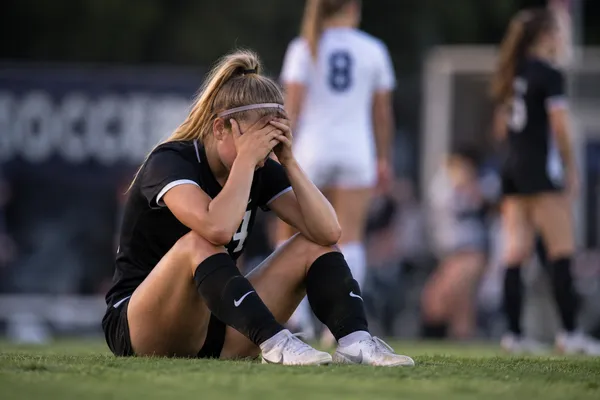
Why Does My Athlete Lose Confidence During Games?
Why Does My Athlete Lose Confidence During Games?
You watch your athlete practice all week and they look great. They’re confident, aggressive, and willing to take chances.
Then game day arrives—and something changes.
They hesitate. They overthink. One mistake seems to stay with them. They start playing safe instead of trusting themselves.
As a parent, it can be frustrating because you know what they’re capable of. You’ve seen it in practice.
So why does confidence disappear when the game starts?
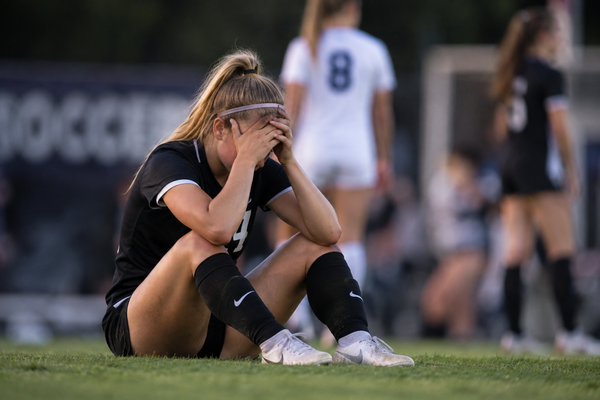
Practice Confidence and Game-Day Confidence Are Different
Practice usually feels safer. There’s less pressure, mistakes don’t feel as costly, and athletes aren’t as worried about the result.
Competition is different.
Now there may be coaches evaluating them, teammates depending on them, parents watching, scouts in the stands, or an opponent trying to expose every weakness.
For some athletes, their attention shifts from playing the game to worrying about the outcome.
They start thinking:
What if I mess up?
What will my coach think?
What if I get taken out?
What if I disappoint my parents?
What if everyone sees me fail?
Once an athlete starts competing from that mindset, confidence can disappear quickly.
The Mistake Parents Often Make
When an athlete struggles with confidence, our natural reaction is to reassure them.
“You’re a great player.”
“Just believe in yourself.”
“Stop thinking so much.”
“You’ve done this a thousand times.”
There’s nothing wrong with encouragement. The problem is that confidence isn't something an athlete can simply switch on because someone tells them to.
Confidence is a skill—and skills can be trained.
Athletes spend hundreds or even thousands of hours developing their physical game. They work on strength, speed, technique, conditioning and sport-specific skills.
But many athletes spend almost no time intentionally training how they think, respond and recover under pressure.
That's what we call the Mental Blindspot™.
Mistakes Can Create a Confidence Spiral
One of the biggest differences between confident athletes and struggling athletes isn't whether they make mistakes.
Everybody makes mistakes.
The difference is what happens next.
An athlete makes a mistake and immediately thinks:
I can't believe I did that.
Then another:
I'm playing terrible.
Then:
Coach is probably going to take me out.
Now they're no longer completely focused on the next play. They're thinking about the previous one—or worrying about the next one.
One mistake has turned into three.
That's why one of the most important mental performance skills an athlete can develop is the ability to reset quickly.
The goal isn't perfection.
The goal is learning how to respond.
Confidence Comes From Trust
Strong game-day confidence isn't about convincing yourself that you're going to play perfectly.
It's being able to say:
I've prepared. I trust my training. I'm ready to compete.
That changes how an athlete approaches competition.
Instead of trying not to make mistakes, they can play aggressively.
Instead of worrying about what everyone else thinks, they can focus on what they control.
Instead of allowing one bad play to define the game, they can reset and move forward.
That's when athletes begin playing more freely.
Mental Performance Can Be Trained
At Mental Performance Center™, we teach athletes practical mental performance skills they can use in real competition.
That can include learning how to:
Build stronger and more consistent confidence
Manage nerves and performance pressure
Stop overthinking
Recover quickly after mistakes
Improve focus and concentration
Control performance talk
Develop effective pre-game routines
Trust their training
Stay composed when the game gets difficult
Just like physical skills, these abilities improve through intentional training and repetition.
What Parents Can Do
One of the best things parents can do is shift the post-game conversation away from judging the outcome.
Instead of immediately asking:
“Why did you do that?”
Try questions like:
“What did you learn today?”
“What did you do well?”
“What can you control next time?”
“What are you proud of?”
You're helping your athlete learn to evaluate performance without attaching their entire confidence to the scoreboard.
That skill becomes increasingly important as competition gets tougher.
Find Your Athlete's Mental Blindspot™
If your athlete looks confident in practice but struggles to perform the same way in competition, don't automatically assume they need more physical training.
The missing piece may be mental.
Mental Performance Center™ created the Mental Performance Gap Analyzer™ to help athletes and parents identify strengths and potential gaps in areas such as confidence, focus, resilience, recovery, execution and leadership.
The assessment is free and takes approximately five minutes.
CLICK HERE: 👉 TAKE THE FREE MENTAL PERFORMANCE ASSESSMENT
Want to learn more about personalized mental performance coaching?
CLICK HERE: 👉 EXPLORE 1-TO-1 COACHING